
Revolutionizing the Way we Respond: Telepresence Response Across a Nation
Violet DeStefano & Benjamin Herskowitz
This year marked a milestone in the realm of emergency response. Hazmat 2 Environmental Fire Rescue (Hazmat 2 EFR), an all-volunteer Hazardous Materials Team in Lancaster County, Pennsylvania, was able to showcase their telepresence response capabilities on a National Level. Through their participation in an exercise at the Safety and Emergency Response Training Center (SERTC), Hazmat 2 EFR was able to demonstrate their telepresence skills from across the Nation.
Hazmat 2 EFR’s Telepresence Unit had the opportunity to play a role during a train derailment training exercise. Three team members from Hazmat 2 were selected to attend PER-290: Tank Car Specialist Course, a course that was generously sponsored by Norfolk Southern at SERTC in Pueblo, CO. The week-long training culminated with a full-scale exercise, involving a simulated 35 Tank Car Derailment. While this may seem like a standard full-scale exercise, the innovation came from the involvement of 10 Hazmat 2 EFR members who operated from remote locations across Pennsylvania: spanning the regions of Lancaster and Allegheny County. This feat could not have been possible without the application of telepresence technology.
Telepresence Team Activation
Hazmat 2 EFR’s Telepresence Unit began the exercise with minimal information, a set of latitude and longitude coordinates of a rail car and a solitary photograph of the scene. While the on-site personnel simulated response to the scene, the Telepresence Unit was allowed a 40-minute head-start.
Telepresence Unit Members were able to provide technical information that supported the on-site team. Initial activities included the simulated use of AskRail to acquire the trains consist. With the data provided, Hazmat 2 EFR’s telepresence unit provided off-site technical research and real-time information to the on-site first responders located in Colorado. Information shared included crucial data ranging from what materials were in rail cars to essential safety information for responder health. CERES was also used to send a basic weather-based model to recommend the direction of response to the scene.
Once crews were on scene, the Telepresence Unit continued to provide chemical property data to guide personal protective equipment selection and tactics. Entry Teams then made their way downrange, equipped with cellular devices to stream live images and video back to team members. In addition to audio, images and video, other collaborative tools were used to keep data organized during the response.
This use of telepresence technology was instrumental in bridging the gap between experts stationed miles away and the on-site responders. Utilizing telepresence technology aided in the dissemination of critical information swiftly and accurately, facilitating a more efficient response to emergency situations. This unique approach not only showcased the power of cutting-edge technology but also highlighted the expertise of Hazmat 2 EFR’s team members.
This training exercise illustrated the power of technology and the unwavering commitment of those on the front lines of emergency response. Hazmat 2 EFR’s Telepresence Unit has helped to redefine the landscape of emergency preparedness, promising a safer and more effective response to future incidents, no matter the location.
Where it began
Hazmat 2 EFR began their Telepresence Unit in 2015 as a way to retain technical expertise of volunteers who moved away from the county. Recruiting from colleges and universities yielded bright, young creative talent. However, after 3-5 years of training and refinement, many moved away from the area, resulting in a significant loss for the team. A phone tree was developed with and then later transformed into a self-hosted Internet Protocol Private Automatic Branch Exchange (IP PABX) phone system with the help of a local business, Hempfield Tech. This was implemented to maximize the efficiency of call routing and the system’s overall effectiveness.
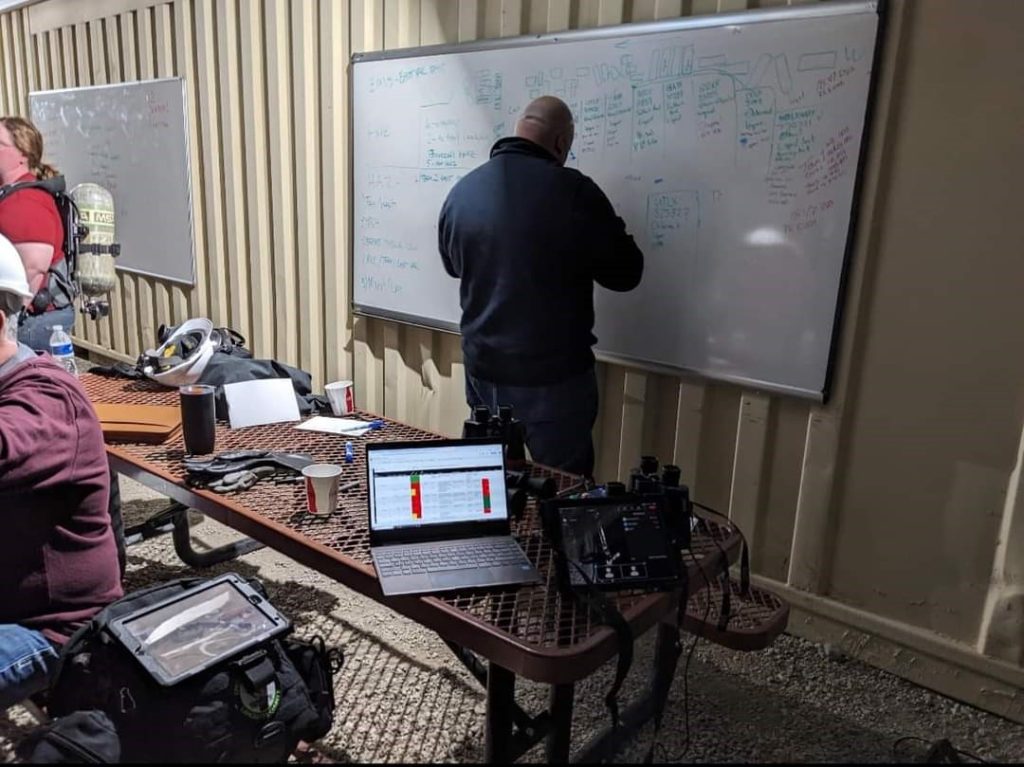
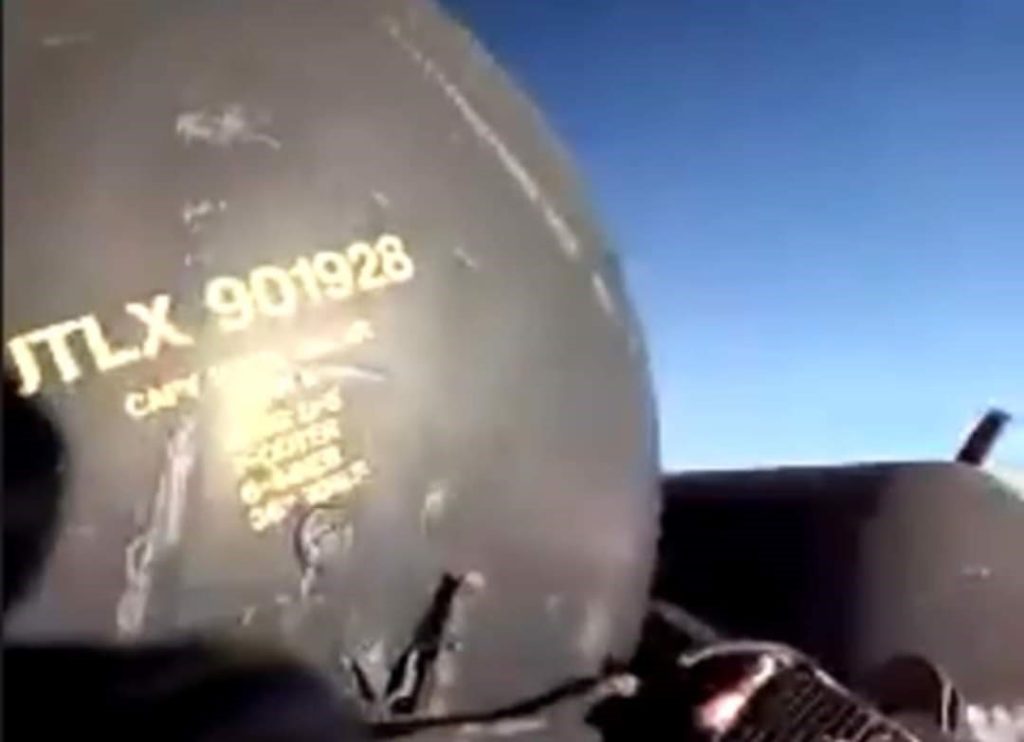
Still image from the live video of the damaged rail cars that were transmitted out to The ICP and the Telepresence unit by multiple entry teams simultaneously. Caption: Color coding helps to keep digital data on the 35 rail cars organized. Captain J. Knapp tracks reported damage and mitigation efforts on the whiteboard Caption: This photograph and a single GPS coordinate is all that was given to the telepresence unit in PA. From this photo, the Ask Rail app (simulated) was used to get the other cars in the train. Real time data on the chemicals, reactions, PPE and plume model were then provided to the Teams in CO.
Today, if a member is in need of reaching a Radiological Response Specialist or a Chemist, there is a single phone number to call. The IP PABX system is programmed based on the training level of responders, and the program is able to identify who is available for a phone call. The IP PABX is built to identify and ring specific groups based on expertise, with the goal of increasing the speed of finding an available specialist. The system has proven to be faster than ringing through a traditional sequential phone list.
Where we stand today
In recent history, Hazmat 2 EFR was dispatched to a building fire at a fertilizer plant. Initial reports to the Hazmat Team indicated that the items on fire in the building were unknown. As well, a Firefighter on scene experienced severe burns on his turnout gear. The first arriving Hazmat Supervisor was handed 80 SDS Packets as a baseline to identify the chemicals of concern.
While having a considerable number of unknown chemicals would be overwhelming for one responder, it was easily handled by many. Five telepresence unit members, in three counties, were able to support the incident. Each member was provided a secure web-folder, a spreadsheet to collaboratively work on, and their independent research assignments. Within 20 minutes, the team was able to identify the top chemicals of concern.
As Hazmat 2 EFR continues to grow, many members have crossed State Lines. Based on the relationships the team has cultivated and the significant capabilities of the Telepresence Unit, the team has been brought in for assistance and consultation by first responders across the Nation. After conferring with our legal team, Hazmat 2 EFR has been able to confirm that the Telepresence Unit can provide assistance across the United States. To date, the Telepresence Unit of Hazmat 2 EFR has been able to provide assistance to Hazardous Materials Teams in six States.
This unit would not be possible without our dedicated first responders, Hazardous Materials Specialists and Local Business Partners. The possibilities are endless as the team continues to develop its Telepresence Unit and strengthen our response capabilities. Hazmat 2 EFR continues to build our capacities for not only the local Lancaster County, Pennsylvania community, but for the Nation.
To learn more information, please email our team at info@hazmat2.com.

Chemicals on Chemicals
When Did You Last Speak to Your Bomb Squad?
The Biological Weapon Threat- (Part 2) Recognizing the problem
About The Author
